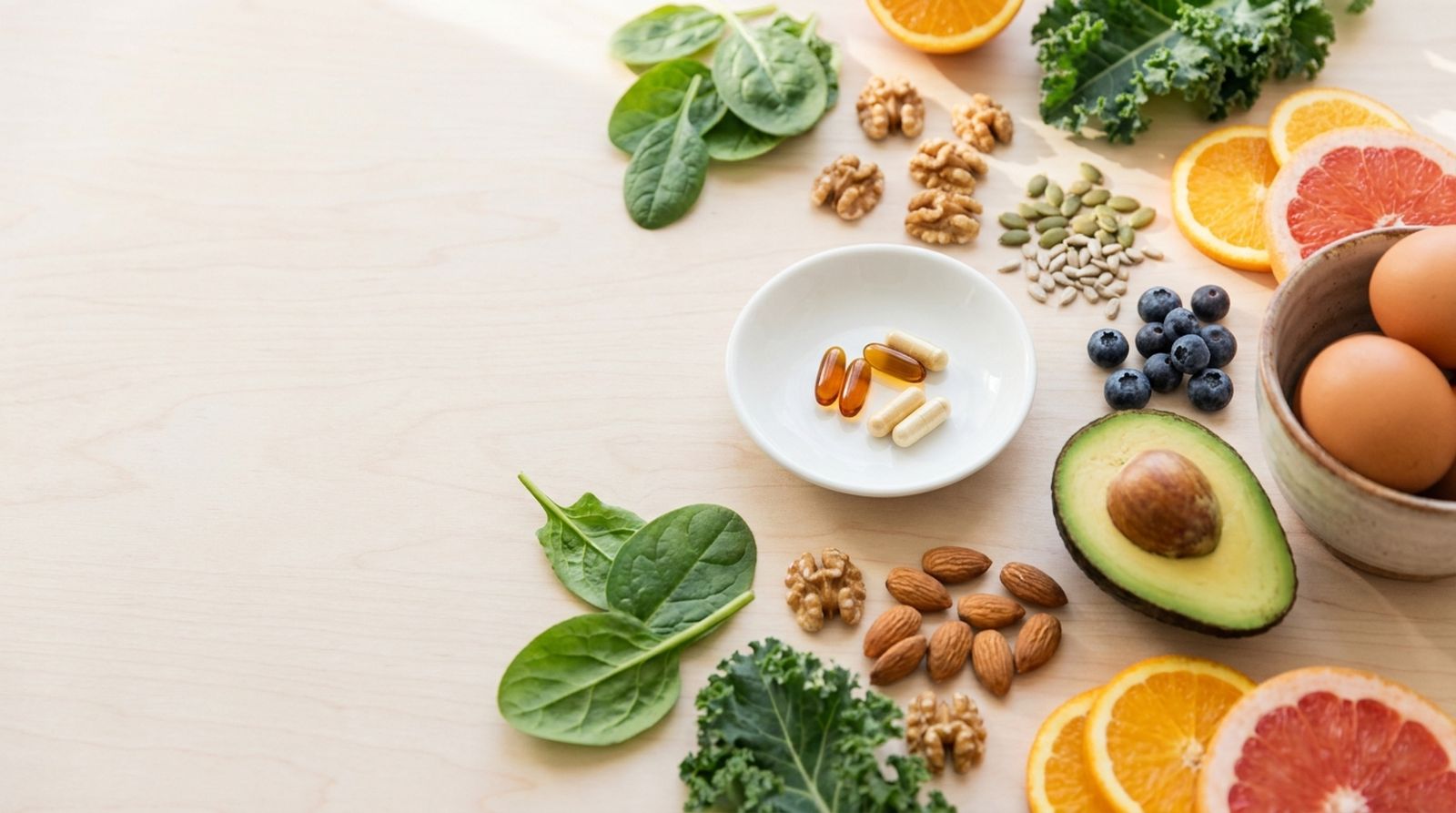
Fertility supplements are food supplements that provide nutrients linked to reproductive health, such as folate, zinc and selenium, alongside compounds like CoQ10 and omega-3 that are still being studied. The best fertility supplements for most UK couples are the ones matched to a specific need, folate for women, zinc and selenium for men, and a shared preconception base for both, rather than any single "top" product.
This guide ranks the ten nutrients most often compared by people trying to conceive in the UK, explains what the evidence actually shows, flags which have officially authorised health claims, and shows how to choose a supplement that fits your situation. It is written for both partners, covers women, men and couples, and is reviewed against UK regulatory standards.
What Are the Best Fertility Supplements in the UK?
There is no single best fertility supplement that suits everyone. The most useful choice depends on whether you are supporting female fertility, male fertility, or both, and on your age, health and any diagnosis such as PCOS. For most people the sensible starting point is the small group of nutrients with the strongest evidence and, in several cases, officially authorised health claims: folate, zinc, selenium and vitamin D, with targeted additions considered from there.
Below, the ten nutrients are grouped by how strong the current evidence is, so you can see where the science is settled and where it is still developing. Think of this as a shortlist to discuss with your healthcare provider, not a prescription.
How We Ranked These Nutrients
This is an evidence-led comparison, not a sales list. Nutrients are ordered by three factors: the strength and consistency of human clinical research, whether they carry a health claim authorised for use in the UK, and how relevant they are to conception planning for women, men or couples. Where a nutrient is popular but the evidence is thin, we say so plainly. The numbered sections that follow are for easy reference and are not a ranking of one nutrient above another.
| Nutrient | UK authorised health claim | What research is exploring | Typical dose range | Most discussed for |
|---|---|---|---|---|
| Folic acid (folate) | Yes: maternal folate status (a neural tube defect risk factor); normal blood formation; amino acid synthesis | Ovulatory health; methylfolate forms | 400 to 800 mcg | Both partners |
| Zinc | Yes: normal fertility and reproduction; normal testosterone levels; DNA synthesis | Sperm parameters; hormone balance | 8 to 15 mg (women); 15 to 25 mg (men) | Both partners |
| Selenium | Yes: normal spermatogenesis; normal thyroid function; protects cells from oxidative stress | Sperm DNA integrity; motility | 55 to 100 mcg (narrow safe range) | Men |
| Vitamin D | Yes: normal immune function; cell division (no fertility-specific claim) | Deficiency and reproductive outcomes | 1,000 to 4,000 IU (test first) | Both partners |
| CoQ10 | None authorised for fertility (listed as an ingredient) | Egg-cell energy in women over 35; sperm motility | 200 to 600 mg | Both partners |
| Omega-3 (DHA/EPA) | Maternal DHA supports normal foetal brain and eye development (a pregnancy claim, not a fertility claim) | Sperm morphology; inflammation | 250 to 1,000 mg (min 200 mg DHA) | Both partners |
| Inositol | None authorised for fertility (listed as an ingredient) | Insulin sensitivity and ovulatory function in PCOS | 2,000 to 4,000 mg (40:1 ratio) | Women with PCOS |
| Maca root | None authorised (listed as an ingredient) | Libido; limited fertility data | 1,500 to 3,000 mg | Both partners (limited evidence) |
| L-arginine | None authorised (listed as an ingredient) | Blood flow in specific IVF contexts | 2,000 to 3,000 mg | Both partners (emerging evidence) |
| NAC | None authorised (listed as an ingredient) | Antioxidant role, mainly studied in PCOS | 600 to 1,800 mg | Women with PCOS (not first-line) |
Which Fertility Nutrients Have Officially Authorised Health Claims?
This is the part most buyer's guides skip, and it matters in the UK. A health claim is only allowed on a supplement if it appears on the Great Britain Nutrition and Health Claims Register. That register is a useful filter when you are comparing products, because it separates nutrients with a recognised, evidence-backed role from those still under investigation.
For reproductive health specifically, the authorised claims are narrow and worth knowing:
- Zinc: contributes to normal fertility and reproduction, and to the maintenance of normal testosterone levels in the blood.
- Selenium: contributes to normal spermatogenesis (sperm formation).
- Folate: contributes to maternal tissue growth during pregnancy, normal blood formation and normal amino acid synthesis. Supplemental folic acid intake increases maternal folate status; low maternal folate status is a recognised risk factor in neural tube defect development in the foetus.
- Vitamin B6: contributes to the regulation of hormonal activity.
Everything else on the list, including CoQ10, omega-3 for fertility, inositol, maca, L-arginine and NAC, is included as an ingredient rather than on the strength of an authorised fertility claim. We report what the research is exploring for each, but we do not present those findings as settled benefits. That distinction is exactly what a careful UK shopper should look for.
What Does the Research Actually Say About Fertility Supplements?
We know it can feel overwhelming when every brand promises the world. So let us cut through the noise together and look at where the evidence is genuinely strong and where it is still catching up. This helps you have a more productive conversation with your healthcare provider, who can assess your individual needs and flag interactions with any medication you take.
How Strong Is the Evidence for Each Supplement?
Here is the honest picture. Folate stands on the firmest ground, with decades of large studies behind its authorised role in maternal folate status and blood formation.1 Zinc and selenium follow, both carrying authorised reproductive claims and consistent data linking deficiency to poorer outcomes.6,9 Vitamin D is well studied for immune function and cell division, and observational research links low levels to reproductive problems, though interventional trials continue to evolve.4
CoQ10 has drawn interest for egg-cell energy in women over 35, with clinical studies reporting mixed results in IVF cohorts and larger trials ongoing.2 Maca has mostly been studied in small trials focused on libido rather than conception.7 L-arginine research is mixed, with some IVF studies reporting changes in blood flow and others finding no effect.8 The science here is still developing, which is worth keeping in mind as you weigh your options.
Where Does the Research Disagree?
Inositol is an interesting one. For women with PCOS, several randomised controlled trials report improvements in insulin sensitivity and ovulatory function.5 For women without PCOS the picture is far less clear, and current guidelines do not position inositol as a standalone first-line option for ovulation induction. There is also an open question about the best form of CoQ10, with ubiquinol favoured by some for absorption and ubiquinone used in most trials. The research has not settled this, so your fertility specialist's input is worth seeking.
1. How Does Folic Acid Support Preconception Health?
If there is one nutrient nearly every fertility specialist agrees on, it is folic acid. This B vitamin is central to DNA synthesis and cell division. In the UK it carries an authorised claim: supplemental folic acid intake increases maternal folate status, and low maternal folate status is a recognised risk factor in the development of neural tube defects in the foetus.1 Folate also contributes to normal blood formation and amino acid synthesis. Some people with specific metabolic needs use methylfolate forms; routine MTHFR gene testing is not recommended, so discuss your situation with your provider if you have a history of miscarriage or family history of neural tube defects.
2. What Is CoQ10 Being Studied for in Fertility?
This is one we get asked about a lot. Coenzyme Q10 is an antioxidant involved in how cells produce energy, and it is included in many preconception formulas as an ingredient rather than on an authorised fertility claim. Researchers have looked at whether it relates to egg-cell energy, particularly in women over 35, since natural CoQ10 levels decline with age. Clinical trials suggest any effect is seen mainly in women undergoing IVF with diminished ovarian reserve, and results have been mixed.2 As with all supplements, discuss dose and duration with your fertility specialist.
3. How Are Omega-3 Fatty Acids Relevant to Reproductive Health?
You have probably heard about omega-3s for heart and brain health, and they are worth knowing about here too. Omega-3 fatty acids, particularly EPA and DHA, are essential fats. Research has explored their relationship with hormone regulation, inflammation and blood flow to reproductive organs.3 There is no authorised fertility claim, but maternal DHA intake does carry an authorised claim for normal foetal brain and eye development, which is relevant once pregnancy begins. Aim for a supplemental 200 mg of DHA a day, on top of the usual recommended omega-3 intake, and ask your provider about the right range for you.
4. Why Is Vitamin D Worth Checking Before Conception?
Think of vitamin D as a behind-the-scenes nutrient. It carries authorised claims for normal immune function and cell division, and observational studies have linked deficiency to irregular cycles and variable outcomes in assisted reproduction, although interventional evidence is still developing.4 The practical step is simple: ask your provider to test your level before supplementing. Many people fall in the 1,000 to 4,000 IU range, but if you are deficient you may need more initially, then retest to confirm you have reached an adequate level. Vitamin D deficiency is common in the UK, especially in winter.
5. What Is Inositol Being Studied for in PCOS?
If you are navigating PCOS, this one is worth understanding. Inositol, particularly myo-inositol and D-chiro-inositol, is a sugar-like compound involved in insulin signalling, and it is included as an ingredient rather than on an authorised claim. For women with PCOS, several randomised trials report improved insulin sensitivity and more regular ovulatory function.5 Current guidance is more cautious for women without PCOS and does not treat inositol as a standalone first-line ovulation treatment. Have a conversation with your specialist about whether it fits your plan, especially if you also take metformin, since effects on insulin sensitivity may add up.
6. How Does Zinc Support Fertility and Reproduction?
Zinc does quiet but important work for both partners, and it carries one of the strongest authorised claims on this list: it contributes to normal fertility and reproduction, to the maintenance of normal testosterone levels in the blood, and to normal DNA synthesis.6 When zinc levels drop too low, sperm quality and hormone balance can suffer. Read our deeper look at zinc and male fertility for the male-factor detail. Keep one thing in mind: excess zinc interferes with copper absorption and interacts with some antibiotics, so stay within recommended doses and tell your provider you are taking it.
7. What Does Research Show About Maca Root?
Maca root comes up often in fertility communities, and we want to be upfront about where the evidence stands. This Andean plant is included as an ingredient with no authorised fertility claim. Most studies have looked at libido and sexual function rather than conception, they tend to be small, and results are not conclusive. Some research suggests possible effects on sperm parameters in healthy men, but larger, well-designed human trials are needed before it could be called an established option.7 It is one to keep an eye on as the science progresses.
8. What Does Research Show About L-Arginine?
L-arginine is an amino acid the body uses to make nitric oxide, a compound that relaxes blood vessels, and it is included as an ingredient with no authorised fertility claim. Some research suggests it may relate to uterine blood flow in specific situations such as IVF poor responders, but the evidence is mixed, with some studies showing an effect and others none.8 Treat it as a possible adjunct in certain contexts rather than a first-line choice, and let your fertility specialist help you weigh it up.
9. How Does Selenium Relate to Sperm Health?
Selenium is a quiet workhorse for male reproductive health and carries authorised claims for normal spermatogenesis, normal thyroid function and protection of cells from oxidative stress.9 Our article on selenium and sperm health covers the male-factor evidence in depth. One important safety point: selenium has a narrow safe range, so stay within 55 to 100 mcg daily; the UK safe upper level for supplements is 350 mcg a day. Tell your provider you are taking it, especially if you also take thyroid medication.
10. What Does Research Show About NAC?
NAC (N-acetyl cysteine) is an antioxidant included as an ingredient with no authorised fertility claim. For women with PCOS there is some encouraging data, with studies reporting positive results when NAC is combined with clomiphene citrate for ovulation induction.10 It is not a first-line PCOS treatment, and evidence for NAC as a standalone fertility supplement in the general population remains limited. If it is on your radar, talk with your specialist about whether it fits and how it coordinates with any medication.
How Do You Choose the Right Fertility Supplement?
With so many products on the shelf, a simple framework helps. Here is how to compare fertility supplements without getting lost in marketing.
- Start with evidence and authorised claims: prioritise formulas built around folate, zinc, selenium and vitamin D, the nutrients with the firmest research and, where relevant, authorised claims.
- Check the dose, not just the label: a nutrient listed at a token amount may not match the ranges used in research. The dose column above is a starting point to discuss with your provider.
- Match it to who you are supporting: women often focus on folate; men on zinc and selenium; couples on a shared preconception base. Our complete guide to fertility supplements for women and men breaks this down further.
- Look for quality signals: a transparent ingredient list, appropriate forms (for example methylfolate where relevant), and clear manufacturing standards.
- Combine with the basics: a fertility-supporting diet, sleep, stress management and, where needed, medical testing do much of the work supplements are often credited with.
Do Fertility Supplements Work for Men and Women Differently?
Many nutrients matter to both partners, but the emphasis differs. For women, folate has the clearest authorised role in preconception and early pregnancy, while CoQ10 and inositol are studied for specific situations such as age or PCOS. For men, zinc and selenium carry authorised claims relevant to reproduction and sperm formation, which is why male-focused formulas tend to feature them. Our evidence-based guide to male fertility goes deeper on the male-factor side. And because shared nutrients like vitamin D matter to both of you, approaching this as a couple often makes sense for many people.
Which Supplements Interact With Fertility Medications?
This is something we really want you to be aware of. Before starting any regimen, hand your fertility specialist a complete list of everything you are considering, including doses. High-dose vitamin E, fish oil and some herbal supplements can affect bleeding risk alongside blood thinners, and St John's Wort may reduce the effectiveness of some fertility medicines. That single step makes a real difference in keeping your treatment plan safe and on track.
Frequently Asked Questions
What are the best fertility supplements in the UK?
There is no single best product for everyone. For most UK couples the sensible base is the nutrients with the strongest evidence and authorised claims: folate, zinc, selenium and vitamin D, with ingredients still under research, such as CoQ10 or inositol, sometimes considered for specific situations. The best choice is the one matched to whether you are supporting female fertility, male fertility, or both, ideally chosen with your GP or fertility specialist.
Are fertility tablets and fertility supplements the same thing?
In everyday UK use, "fertility tablets," "fertility vitamins" and "fertility supplements" usually mean the same thing: food supplements taken to support reproductive health during preconception. The word "tablets" simply describes the format. What matters is the nutrients inside and their doses, not whether the product is a tablet, capsule or softgel.
How long should I take fertility supplements before trying to conceive?
Many specialists suggest starting two to three months before trying to conceive. This reflects biology: egg maturation takes roughly 90 days and sperm development around 74 days, so nutrients need time to be part of the picture as eggs and sperm develop. The ideal timeline varies by person and nutrient, so discuss a personalised plan with your provider.
Can I take all ten of these supplements at once?
Taking all ten together is usually unnecessary and can raise the risk of interactions or excessive intake of some nutrients. A more practical approach is to start with the highest-evidence nutrients (folate, zinc, selenium, vitamin D) and add targeted options based on your situation and provider guidance. A comprehensive preconception multivitamin covers several of these at appropriate doses.
Do natural fertility supplements work better than standard ones?
"Natural" describes the source, not the strength of evidence. A nutrient's usefulness depends on the research behind it and the dose, not on whether it is labelled natural. Some plant-derived ingredients such as maca have limited fertility evidence, while well-studied nutrients like zinc and folate have authorised claims regardless of how they are marketed.
Are fertility supplements safe alongside fertility medications?
Some are, and some may interact in ways that affect treatment. Inositol and NAC have been studied alongside clomiphene citrate in some groups, while other supplements may interact with gonadotrophins or blood thinners. Always discuss your full supplement list with your fertility specialist before combining anything with prescribed medication.
Supporting Your Fertility with FertilitySmart
The nutrients discussed in this guide, including folate, zinc, selenium and vitamin D, are the foundation of a considered preconception approach for both partners. Supplements work best as one part of a bigger picture that includes a balanced diet, healthy lifestyle and appropriate medical care.
At FertilitySmart, we offer both fertility supplements for women and fertility supplements for men, formulated with nutrients discussed in this guide. Explore our range of fertility supplements to see how the formulas are put together.
Related Reading
Explore these guides for deeper detail on individual nutrients and how to build your plan.
-
A Complete Guide to Fertility Supplements for Women and Men
The full picture from both the female and male perspective, our pillar guide on the topic.
-
What Does CoQ10 Do for Fertility?
A detailed look at what CoQ10 is being studied for in reproductive health.
-
How Does Folic Acid Help with Fertility?
Everything to know about folate, the nutrient with the clearest authorised preconception role.
-
Zinc and Male Fertility: What the Evidence Shows
The male-factor detail on zinc, one of the few nutrients with an authorised reproductive claim.
-
Selenium and Sperm Health: What the Evidence Shows
How selenium relates to spermatogenesis, with the safety window explained.
-
Vitamin E for Fertility
Where vitamin E sits in the evidence, listed as an ingredient rather than an authorised claim.
-
Should I Take Vitamins to Help Get Pregnant?
A broader guide to choosing vitamins for conception and preconception planning.
-
L-Carnitine for Fertility
L-carnitine's place in the evidence, listed as an ingredient under investigation.
-
Fertility Diet
How to combine supplementation with a fertility-supporting diet.
References
- American College of Obstetricians and Gynecologists. Folic Acid Supplementation. acog.org
- Bentov Y, et al. Coenzyme Q10 supplementation and oocyte aneuploidy in women undergoing IVF-ICSI treatment. Clinical Medicine Insights: Reproductive Health, 2014. ncbi.nlm.nih.gov
- Hammiche F, et al. Increased preconception omega-3 polyunsaturated fatty acid intake improves embryo morphology. Fertility and Sterility, 2011. pubmed.ncbi.nlm.nih.gov
- Chu J, et al. Vitamin D and reproductive health: a meta-analysis. Human Reproduction, 2018. academic.oup.com
- Nestler JE, et al. Inositol and ovarian function in women with PCOS. New England Journal of Medicine, 1999. nejm.org
- Fallah A, et al. Zinc is an essential element for male fertility: a review of Zn roles in men's health, germination, sperm quality, and fertilization. Journal of Reproduction and Infertility, 2018. ncbi.nlm.nih.gov
- Gonzales GF. Maca and reproductive health. Evidence-Based Complementary and Alternative Medicine, 2012. ncbi.nlm.nih.gov
- Battaglia C, et al. L-arginine supplementation and uterine blood flow. Human Reproduction, 1999. academic.oup.com
- Moslemi MK, et al. Selenium supplementation and sperm quality. International Journal of General Medicine, 2011. doi.org/10.2147/IJGM.S16275
- Rizk AY, et al. N-acetyl-cysteine is a novel adjuvant to clomiphene citrate in clomiphene citrate-resistant patients with polycystic ovary syndrome. Fertility and Sterility, 2005. pubmed.ncbi.nlm.nih.gov/15705376

Fertility Health Writer at FertilitySmart
Marina Carter is a specialist health writer with experience in reproductive health, fertility nutrition and evidence-based conception support. She focuses on translating peer-reviewed research into practical guidance for individuals and couples on their fertility journey. All FertilitySmart articles are reviewed for accuracy against current UK regulatory standards. Read full bio →